
Backpack, camp, cycle, and paddle while you explore the Rocky Mountains.
Wild Rockies Field Institute
Missoula, Montana
100
Students on Campus
Missoula
Location
100,000
Metro Population
100
Students on Campus
Missoula
Location
100,000
Metro Population
About This Campus
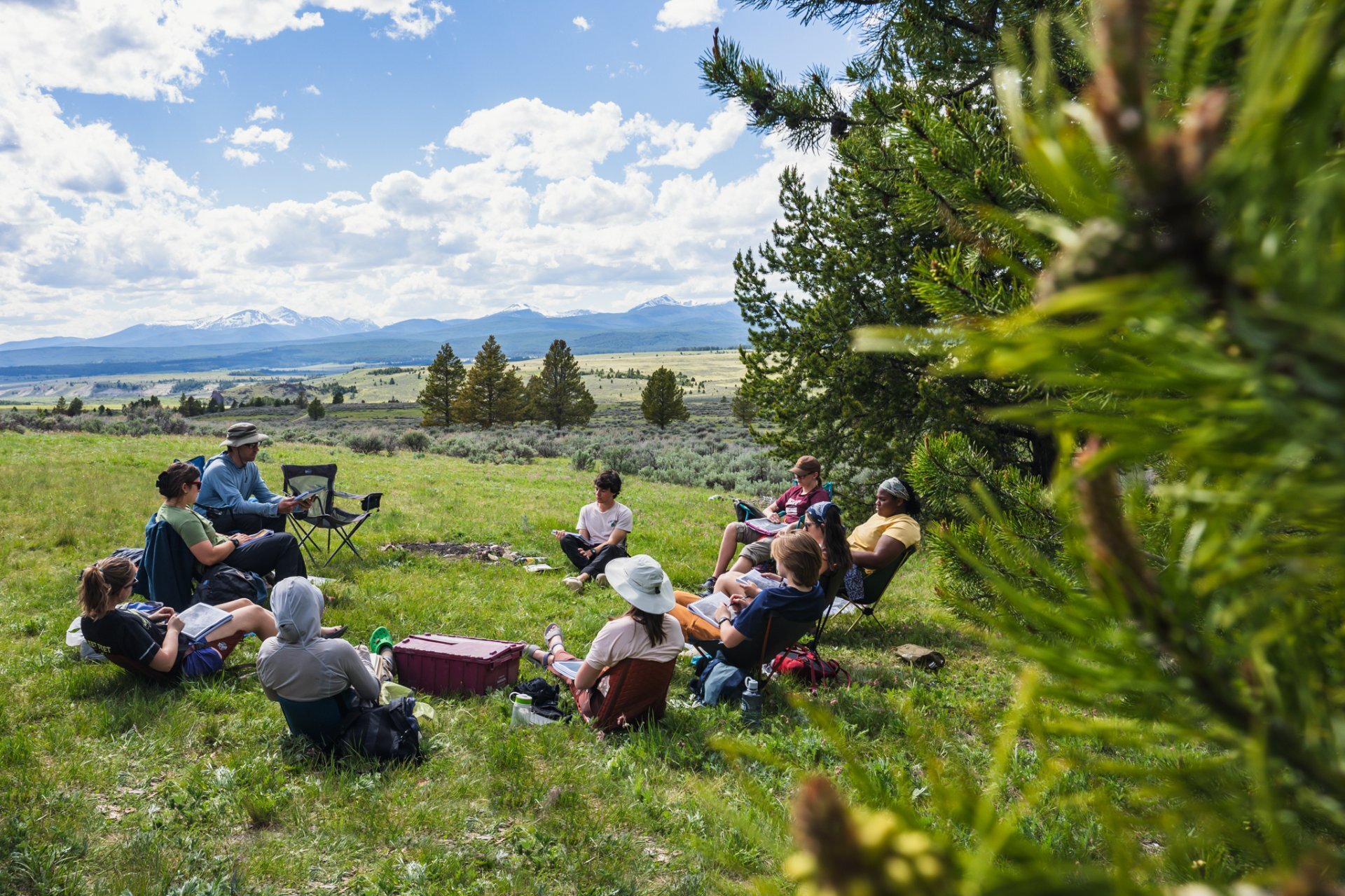
The Wild Rockies Field Institute (WRFI) offers a one-of-a-kind higher education experience rooted in field-based, environmentally focused, expedition-style learning across the American Rockies. Our programs weave together rural communities, Indigenous guest speakers, academic literature, skilled instructors, & stunning landscapes to create truly transformational learning.
Each day, students spend three to six hours immersed in academics—ranging from instructor lectures & small-group discussions to debates, writing workshops, & guest presentations. The rest of the day is dedicated to moving through the landscape itself. Most often, this means traveling under your own power: backpacking, paddling, or cycling through the very ecosystems you’re studying.
Because WRFI courses are interdisciplinary & grounded in the liberal arts, students join us from a wide range of majors, interests, & life experiences—enriching every conversation with diverse perspectives. WRFI is academic—in nature.
*Learn from the landscape* *Earn academic credits* *Make friends for life*
"WRFI was the most valuable experience of my undergraduate education."
Helpful Information
WRFI's admissions process is somewhat unique for the National Student Exchange. Please complete an initial online application to get started; from there, you'll meet with our Student Experience Manager, fill out an Academic Course Application (including two references), and be conditionally accepted by WRFI. At that point, you will also complete an NSE application and be placed by your campus coordinator. We're excited to work with each student (and NSE coordinator!) through this process!
Location Information
WRFI courses take place across the American Rockies, each rooted in a distinct landscape. Some programs explore iconic “crown jewel” regions such as Glacier National Park and the Greater Yellowstone Ecosystem, while others venture into quieter, seldom-visited areas like the Bob Marshall Wilderness, the Missouri River Breaks, or Montana’s Snowcrest Range. In the Southwest, students travel through the dramatic canyons of the Dirty Devil, Dark Canyon, and Labyrinth Canyon in Utah.
Every WRFI course is intentionally place-based, with academic themes shaped by the ecosystems, issues, and communities of the regions we study.
Academics
REGISTRATION:
- Course Catalog
- Schedule of Classes
- Registration Timing: According to Class Standing
TERM DATES:
Fall Start Date: 08/28/2026 - Fall End Date: 11/05/2026
Spring Start Date: 03/28/2027 - Spring End Date: 06/05/2027
Summer Start Date: 05/16/2027 - Summer End Date: 08/21/2027
NOTABLE ACADEMICS PROGRAMS:
- Colorado Plateau — Colorado Plateau is one of WRFI's flagship semester programs, offering 15 academic credits through a 70-day field experience exploring red rock country of Utah and Arizona. Students backpack both Horseshoe and Dirty Devil Canyons, visit Diné and Hopi elders, backpack in the Dark Canyon Wilderness, and float the Green River. Academics include Natural Resource Science and Management, Environmental Studies, Geography, and Native American Studies. Students on this course will gain an academic and experience-based understanding of the issues faced by the cultures and landscapes of the Colorado Plateau. “Resilience and Revolution in a Region on the Edge” is the unifying theme of the course. We explore how these concepts apply to various biophysical and social systems experiencing disturbance – either by rebounding to a previous state (resilience) or with substantial shifts in structure and function (revolution).
- Montana Afoot & Afloat — Montana Afoot and Afloat one of WRFI's flagship semester programs, offering 15 academic credits through a 70-day field experience exploring the stunning landscapes of Montana. Students backpack in the Bob Marshall Wilderness, learn from Indigenous elders across Montana, visit both Glacier and Yellowstone National Parks, paddle an iconic section of the Missouri River, explore the Big Snowy mountain range, and paddle the Tongue River. Academics include Environmental Studies, Geography, and Native American Studies. Gain a holistic picture of Montana’s landscapes, ecosystems, and geography by tracing the path of water in Montana’s dramatic landscape from headwaters high up in the mountains to flood plains in valleys that host important wildlife and communities alike. Students on this course will gain an integrated understanding of future, past, and present relationships between the human communities and landscapes that characterize Montana’s rich and diverse geography and is designed to give students the experiences and academic background to formulate a personal land ethic – that is, a vision of a wise and beneficial way to relate to the land.
UNIQUE ACADEMICS PROGRAMS:
- Wild Rockies: Conservation Across Boundaries — Wild Rockies: Conservation Across Boundaries is WRFI's summer semester, offering 12 credits over a 42-day field experience. Students learn about different land management strategies in Montana, the Blackfeet Nation, British Columbia, CA, Alberta, CA, and the tribal lands of the Confederated Salish and Kootenai Tribes while considering the conservation outcomes of differing land management strategies. The regions explored in this course are characterized by scenic mountain landscapes and a nearly complete assemblage of native wildlife. These conditions have helped draw a rapidly growing human population, with attendant development impacts on landscapes and wildlife. Students on this course will gain an academic and experience-based understanding of the issues faced by the rural communities and landscapes in this spectacular and evolving region.
SPECIAL PROGRAMS:
- Colorado Plateau: Desert Canyons and Cultures
- Cycle the Rockies: Energy and Climate Change in Montana
- Environmental Ethics: Climate Change and Visions of a Sustainable Future - Section 1
- Environmental Ethics: Climate Change and Visions of a Sustainable Future - Section 2
- Montana Afoot and Afloat: Human/Land Relations
- Restoration Ecology in Greater Yellowstone - Section 1
- Restoration Ecology in Greater Yellowstone - Section 2
- Southwest Climate Studio Art: Change and Resilience in the American Southwest
- Wild Rockies: Conservation Across Boundaries
OPTIONS:
Honors Access:
UNDERGRADUATE MAJORS OPEN TO NSE STUDENTS:
Limited
Closed
- Agricultural Business and Management
- Agricultural Economics
- AGRICULTURAL/ANIMAL/PLANT/VETERINARY SCIENCE AND RELATED FIELDS
- Agriculture
- Agroecology and Sustainable Agriculture
- Agronomy and Crop Science
- American History (United States)
- American Indian/Native American Languages Literatures and Linguistics
- Ancient Studies/Civilization
- Anthropology
- Anthrozoology
- Aquatic Biology/Limnology
- Archeology
- Art History Criticism and Conservation
- Art/Art Studies
- Atmospheric Chemistry and Climatology
- Atmospheric Sciences and Meteorology
- Bioenergy
- Biological and Physical Sciences
- Biological/Biosystems Engineering
- Biology/Biological Sciences
- Botany/Plant Biology
- Canadian History
- Ceramic Arts and Ceramics
- Civil Engineering
- Classical and Ancient Studies
- Climate Science
- Clinical Psychology
- Community Involvement
- Conservation Biology
- Crafts/Craft Design Folk Art and Artisanry
- Creative Writing
- Cultural Anthropology
- Cultural Resource Management and Policy Analysis
- Cultural Studies and Comparative Literature
- Design and Applied Arts
- Design and Visual Communications
- Digital Arts
- Drawing
- Earth Systems Science
- Ecology
- Ecology Evolution Systematics and Population Biology
- Education
- Educational Psychology
- Energy and Environmental Policy
- English Language and Literature
- Entomology
- Environmental Biology
- Environmental Chemistry
- Environmental Design/Architecture
- Environmental Geosciences
- Environmental Science
- Environmental Studies
- Environmental Toxicology
- Environmental/Environmental Health Engineering
- Environmental/Natural Resource Economics
- Environmental/Natural Resource Recreation and Tourism
- Environmental/Natural Resources Law Enforcement and Protective Services
- Environmental/Natural Resources Management and Policy
- Ethics
- Evolutionary Biology
- Farm/Farm and Ranch Management
- Fiber Textile and Weaving Arts
- Fine Arts and Art Studies
- Fine/Studio Arts
- Fishing and Fisheries Sciences and Management
- Forest Engineering
- Forest Management/Forest Resources Management
- Forest Resources Production and Management
- Forest Sciences and Biology
- Forestry
- Geoarcheaology
- Geobiology
- Geography
- Geological and Earth Sciences/Geosciences
- Geological/Geophysical Engineering
- Geology/Earth Science
- Geophysics and Seismology
- Historic Preservation and Conservation
- HISTORY
- History
- Horticultural Science
- Human Biology
- International/Globalization Studies
- Jewelry Arts
- Land Use Planning and Management/Development
- LEGAL PROFESSIONS AND STUDIES
- Legal Professions and Studies
- Legal Studies
- LIBERAL ARTS AND SCIENCES STUDIES AND HUMANITIES
- Literature
- Meteorology
- Multi-/Interdisciplinary Studies
- NATURAL RESOURCES AND CONSERVATION
- Natural Resources Conservation and Research
- Natural Resources/Conservation
- Natural Sciences
- Outdoor Education
- Painting
- Philosophy
- PHILOSOPHY AND RELIGIOUS STUDIES
- Photography
- Physical and Biological Anthropology
- PHYSICAL SCIENCES
- Physical Sciences
- Plant Pathology/Phytopathology
- Plant Physiology
- Plant Sciences
- Political Economy
- Political Science and Government
- Pre-Law Studies
- Psychology
- Range Science and Management
- Risk Management
- Rural Sociology
- Sculpture
- Social Psychology
- SOCIAL SCIENCES
- Social Sciences
- Sociology
- Soil Science and Agronomy
- Soil Sciences
- Sustainability Studies
- Sustainable Design/Architecture
- Teacher Education and Professional Development Specific Subject Areas
- Urban Studies/Affairs
- Visual and Performing Arts
- Water Resources Engineering
- Water Wetlands and Marine Resources Management
- Wildlife and Wildlands Science and Management
- Wildlife Fish and Wildlands Science and Management
- Writing
- Zoology/Animal Biology
Conditions
GPA AND OTHER ACADEMIC REQUIREMENTS:
EXCHANGE PREFERENCES:
- Full Year Exchange: Accepted
- Single Term Exchange: Accepted
- Summer Exchange: Summer Only Accepted
INTERNATIONAL STUDENTS (Visa Students):
- Does your campus accept International Students (those already in the U.S. on a student visa)?
CANADIAN EXCHANGE:
Learn More
- Receive from Canada: Will Accept Home Pay
- Accept international students studying in Canada on a visa? - No
Tuition/Finance
Figures per Semester are current as of 02/10/2026
TUITION:
- Campus Budget
- Fees are subject to change without notice
- Home Tuition Payment: Not Available
-
Away Tuition Payment: Available
Estimated cost:
Per Term Tuition (Resident-Rate) - $5395
Per Term Mandatory Fees - $0
MAXIMUM CREDIT HOURS PER SEMESTER:
- Host Payment: 15
IMPORTANT NOTES:
WRFI offers numerous tuition discounts and scholarships, all of which are listed here: https://www.wrfi.net/admissions/financial-assistance/ Please note that the University of Montana charges a credit registration fee of $175 per every 3 credits, which is not included in the cost of tuition.
Financial Aid for NSE Students. Regardless of Payment Plan, financial aid is awarded by and disbursed from your home campus.
Room/Meals
Figures per Semester are current as of 11/26/2025
ON-CAMPUS HOUSING PER SEMESER:
- Is on-campus housing available? Yes
- Is on-campus living required? Yes
- Number of reserved housing spaces: 0
- Average Room Cost (per term): $0
- On-Campus Housing
Off-CAMPUS HOUSING:
NOTES ABOUT ON-CAMPUS HOUSING:
All housing at WRFI is in tents for our field-based programs. Housing on the night prior to and night after a course is estimated in the travel section of the "other costs" represented in tuition.
MEAL PLANS:
- Are meal plans available on campus? Yes
- Is a meal plan purchase required for on-campus, non-apartment residence halls? Yes
- Average Meal Plan Cost (per term): $0
NOTES ABOUT MEAL PLANS:
WRFI provides dinner on all of our courses for all course participants; this is included in our tuition fee. Students are responsible for purchasing their own breakfasts and lunches, estimated at $5 per meal on average.
Fees are subject to change without notice.
Chance of Acceptance
Direct Placement for Spring 2027
Home Tuition Payment Plan
N/A
Direct placement is not available for this payment plan during Spring 2027.
Away Tuition Payment Plan
Open
Direct placement is available for Spring 2027! Apply now and receive an immediate decision.
Priority Placements for Academic Year 27/28
If this is your top choice campus...
Home Tuition Payment Plan
N/A
This campus is not accepting students on this tuition payment plan.
Away Tuition Payment Plan
Open
This campus usually accepts all eligible applicants. Apply and start packing your bags!
If this is your alternate choice campus...
Home Tuition Payment Plan
N/A
This campus is not accepting students on this tuition payment plan.
Away Tuition Payment Plan
Open
This campus usually accepts all eligible applicants. Apply and start packing your bags!